Dr. Rigo Melgar
Bio
I'm an ecological economist interested in learning how to thrive and dance with co-evolving systems. I’m passionate about bringing people together to educate, co-learn and envision how we can co-create resilient and regenerative systems by applying diverse post-growth and well-being centered economic frameworks grounded in the ethical, biophysical, and systems foundations of ecological economics.
Fundamentally, the principal contribution of ecological economics is to help us reconnect humankind with the rest of nature, which is required to develop institutions, policies, and cultures that can foster well-being economies within planetary boundaries. Naturally, this leads us to conclude that economic growth is only a means to an end of well-being, and, therefore, we should pursue activities that enable resilience and regeneration for humans and the rest of nature.
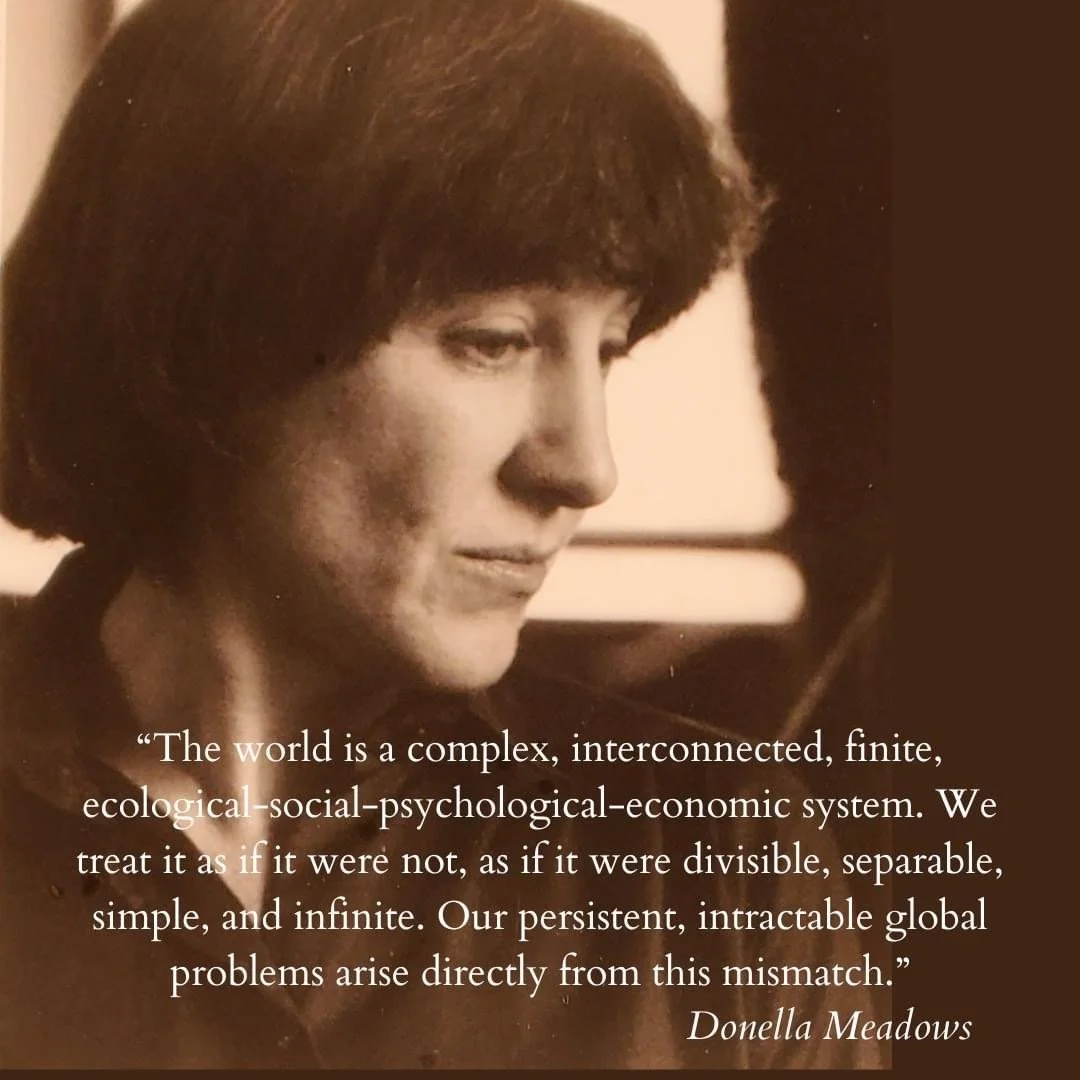
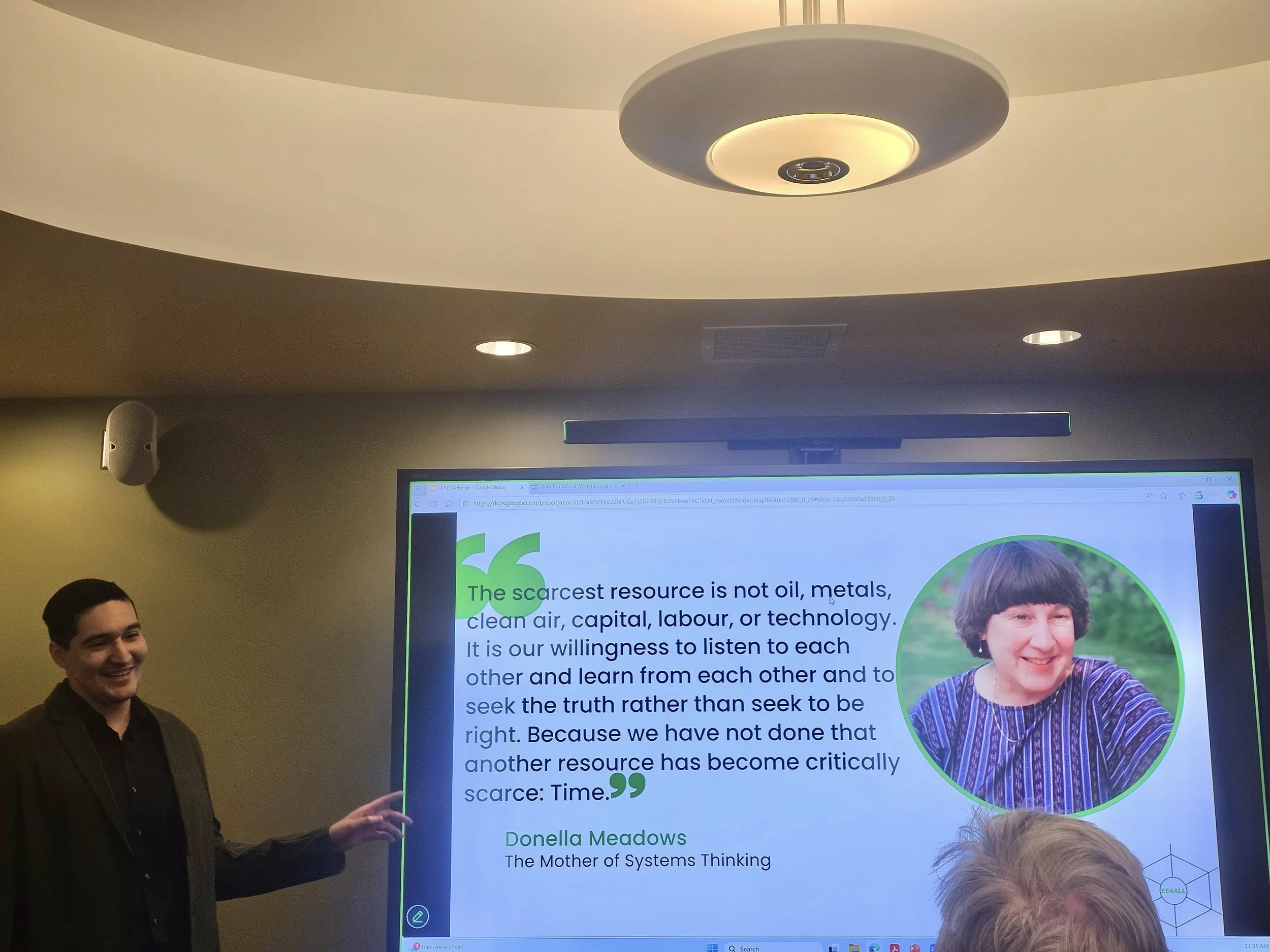
My work is inspired by many, but especially by this quote from Donella Meadows, the mother of systems thinking: “The scarcest resource is not oil, metals, clean air, capital, labour, or technology. It is our willingness to listen to each other and learn from each other and to seek the truth rather than seek to be right.”
I obtained my Ph.D. from the University of Vermont (UVM) with a specialization in ecological economics. I completed dual master’s degrees in environmental science (with an area of study in biophysical and ecological economics) and public affairs (with an area of study on international development and the UN system) from the State University of New York College of Environmental Science and Forestry (SUNY-ESF) and Syracuse University’s Maxwell School of Citizenship and Public Affairs (ranked #1 by US News and World Report). I also obtained a Bachelor of Science in Environmental Studies with a Minor in Renewable Energy from SUNY-ESF in Association with Syracuse University.
Teaching Experience in Ecological Economics
I have many years of experience exploring new ways of developing curricula and teaching about ecological economics in person, virtually, and hybrid settings.
Towards the end of my undergraduate academic career, I was given the opportunity by my then advisor Dr. Charles Hall, a systems ecologist and pioneer of the concept of energy return on investment, to assist him in the development of the new area of study in biophysical and ecological economics. This provided me with experience in learning how to navigate committees on curriculum and other administrative and funding limitations faced by emergent and desperately needed sustainability programs such as ecological economics.
During graduate school, I co-instructed my first hybrid course as a master’s student with Dr. Hall. This was a huge learning experience since Zoom or Teams did not exist and we had to rely on less advanced technologies for virtual learning, which created a myriad of obstacles that needed to be overcome. However, this experiment in hybrid teaching resulted in me being awarded the Excellence in Teaching Award by SUNY-ESF’s Graduate Student Association.
From these early experiences, I became increasingly passionate about spreading the knowledge of ecological economics because I saw its potential to help us reconnect humankind with the rest of nature.
I went to UVM to do my PhD because I wanted to become an expert in ecological economics, and its Gund Institute is known as an early pioneer of the field in the USA with renowned ecological economists Dr. Jon Erickson and Dr. Joshua Farley. I joined a new program called the Leadership for the Ecozoic (L4E), which provided us with early funding and a community of practice to study ecological economics, among other fields. In particular, I was attracted to L4E because of its early focus on transforming higher education to promote the Ecozoic, or an new era of mutually enhancing relationships between humankind and the rest of Earth’s community of life.
During my PhD at UVM, I co-founded Ecological Economics For All (EE4ALL). Amid the challenging times of COVID-19, I realized that we needed to put our energies to good use by harnessing the emergent technologies that were becoming available for virtual learning to expand the reach of ecological economics education around the world beyond the limitations of academia. From its early humble beginnings, EE4ALL has been able to reach a growing number of people interested in learning to ground economics in the ethical, biophysical and system foundations required to make economics fit-for-purpose amid the worsening polycrisis of the 21st century.
In the last few years, EE4ALL has demonstrated that there is overwhelming demand for ecological economics. This has inspired the development of a new online program in ecological economics at UVM, which I helped to launch alongside Dr. Erickson in the Fall of 2025. I have also been involved in similar efforts to teach and develop curricula in ecological economics for Modern Money Lab and Torrens University’s online graduate program in the Economics of Sustainability offered in Australia and worldwide.
Research Experience in Ecological Economics
During my PhD at UVM, I worked alongside advisors Dr. Erickson and Dr. Farley to inform the theory of ecological macroeconomics. My research focus was on the implications of the financialization of the U.S. economy for energy security and achieving well-being within planetary boundaries, and thinking beyond GDP metrics to incorporate the goals of wellbeing economies. This work culminated with a dissertation titled The Real Versus Virtual Wealth of Nations: Toward Post-Growth Regenerative Financial Systems to Secure Net Energy to Sustain Human Wellbeing Within Planetary Boundaries.
For all of these efforts, I was awarded the Rubenstein School’s Outstanding Ph.D. Research and Scholarship Award at UVM, which recognizes students seeking a Doctoral degree through research, scholarship, and other creative works that represent the best overall contribution to their field of study.
I also have a background of expertise in the UN system from my dual master's program that included a focus on international global policy and administration. Following my master's, I worked at UNEP with the director of the NYC office, conducting research on the analysis of the financial architecture of the entire UN system. This experience gave me an opportunity to understand the complexity of the UN system, and the challenges it created to fund the implementation of the Sustainable Development Goals and the Paris Climate Agreement.
For a list of publications check my Google Scholar profile.
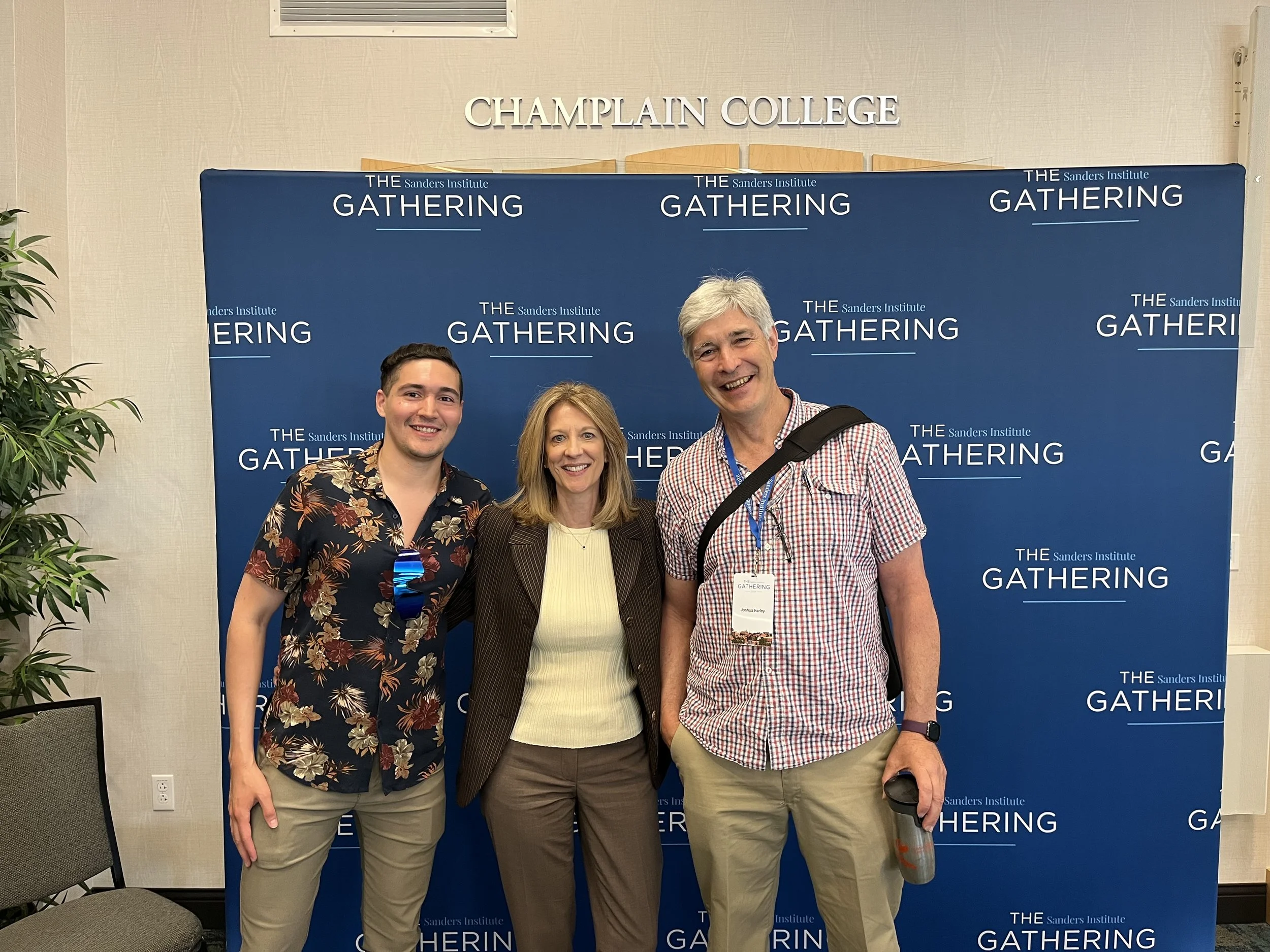
With Dr. Stephanie Kelton and Dr. Joshua Farley for a viewing and panel discussion for the documentary on Finding the Money.
From Research to Action
I’m currently working with the Beyond Bretton Woods think tank as a member of their steering committee to promote a regenerative paradigm shift in the financial system. I see these efforts as an ideal way to continue to ground our economic and financial thinking in the ethical, biophysical and systems foundations of ecological economics required to promote ecocentric financial systems that can foster the resilience and regeneration of all life on Earth.
As part of my PhD, I quantified the Genuine Progress Indicator (GPI) for the State of Vermont. Since 2012, Vermont is one of the few states that has enacted the GPI into law. The recent study I completed from 2000-2023 attempted to apply the most recent methodology to be comparable and consistent to the GPIs of Hawaii and Maryland. The GPI will become a report to the state to inform the need to shift toward well-being targets.
To complement the GPI, we have also quantified the doughnut of social shortfall and ecological ceiling for Vermont, which will become part of an upcoming report for the Wellbeing Economy Alliance of Vermont. This work builds on deliberative workshops that we conducted in the last few years across the State with diverse stakeholders. This report aims to help inform wellbeing economy targets that the State should budget for to promote resilience and prosperity.
I have also collaborated with Rethinking Economics for many years to diversify economic education and develop crash courses. I co-founded the Rethinking Economics chapter at UVM and have continued to support efforts to shed light on relevant issues such as the impact of Artificial Intelligence on a Wellbeing Economy in Vermont. We are currently planning various workshops on the ecological economic implications of AI for Vermont and beyond that build on this earlier work.
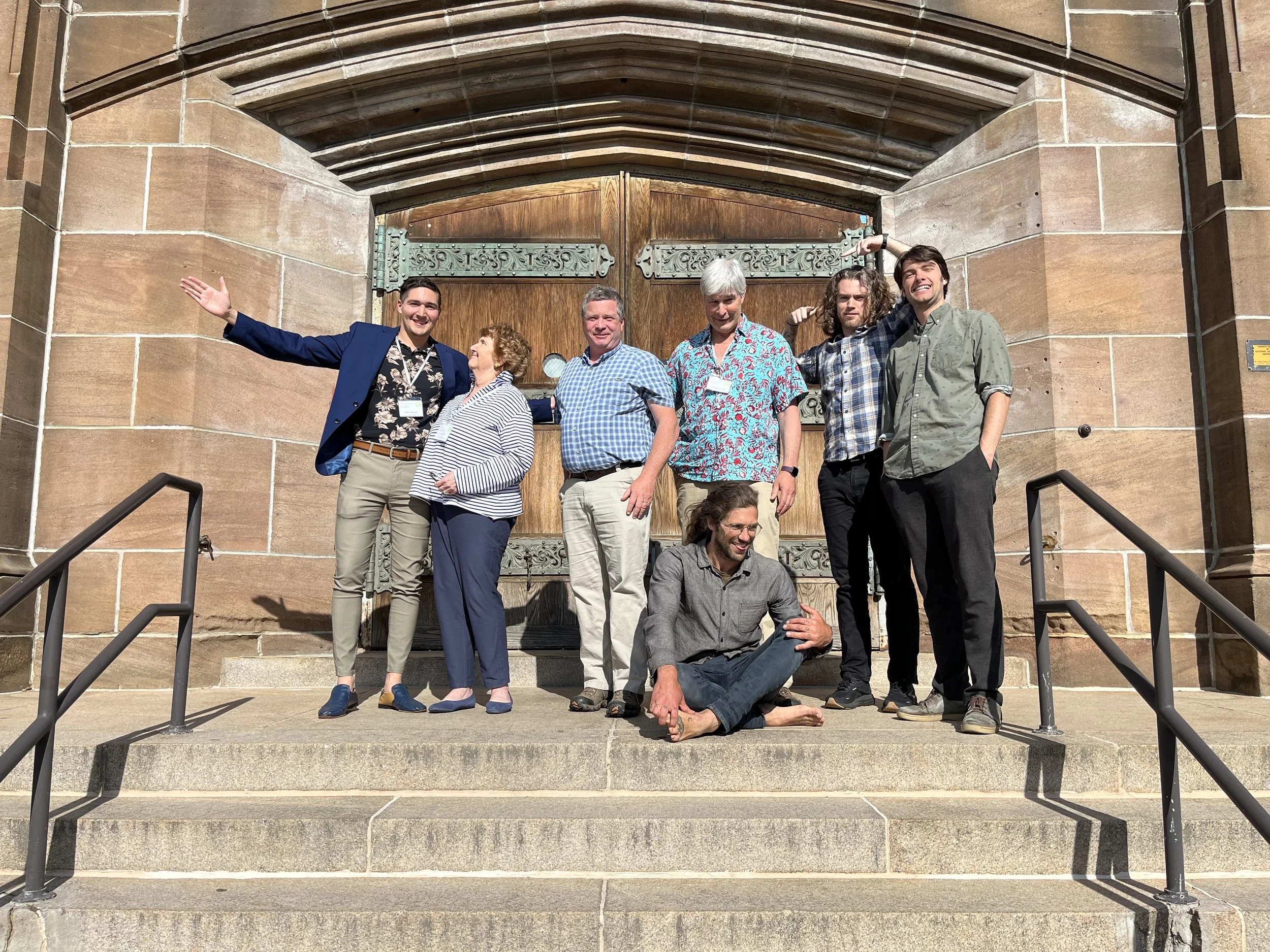
At the United States Society for Ecological Economics meeting in New York in 2024.